Showing posts with label American. Show all posts

Tuesday, February 7, 2012

Swingin' the Dream: Big Band Jazz and the Rebirth of American Culture

Swingin' the Dream: Big Band Jazz and the Rebirth of American Culture Review
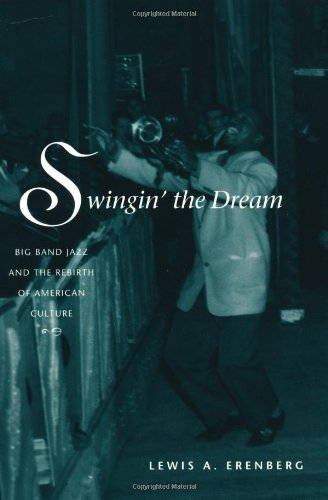


During the 1930s, swing bands combined jazz and popular music to create large-scale dreams for the Depression generation, capturing the imagination of America's young people, music critics, and the music business. Swingin' the Dream explores that world, looking at the racial mixing-up and musical swinging-out that shook the nation and has kept people dancing ever since.

"Swingin' the Dream is an intelligent, provocative study of the big band era, chiefly during its golden hours in the 1930s; not merely does Lewis A. Erenberg give the music its full due, but he places it in a larger context and makes, for the most part, a plausible case for its importance."—Jonathan Yardley, Washington Post Book World

"An absorbing read for fans and an insightful view of the impact of an important homegrown art form."—Publishers Weekly

"[A] fascinating celebration of the decade or so in which American popular music basked in the sunlight of a seemingly endless high noon."—Tony Russell, Times Literary Supplement


Wednesday, December 21, 2011

Bands of Sisters: U.S. Women's Military Bands during World War II (The American Wind Band)

Bands of Sisters: U.S. Women's Military Bands during World War II (The American Wind Band) Review


On Saturday, November 11, 1944, radio listeners heard an enthusiastic broadcast announcer describe something they had never heard before: Women singing the "Marines' Hymn" instead of the traditional all-male United States Marine Band. The singers were actually members of its sister organization, The Marine Corps Women's Reserve Band of Camp Lejeune, North Carolina. Today, few remember these all-female military bands because only a small number of their performances were broadcast or pressed to vinyl. But, as Jill Sullivan argues in Bands of Sisters: U.S. Women's Military Bands during World War II, these gaps in the historical record can hardly be treated as the measure of their success.


The novelty of these bands—initially employed by the U.S. military to support bond drives—drew enough spectators for the bands to be placed on tour, raising money for the war and boosting morale. The women, once discharged at the war's end, refused to fade into post-war domesticity. Instead, the strong bond fostered by youthful enthusiasm and the rare opportunity to serve in the military while making professional caliber music would come to last some 60 years. Based on interviews with over 70 surviving band members, Bands of Sisters tells the tale of this remarkable period in the history of American women.

Sullivan covers the history of these ensembles, tracing accounts such as the female music teachers who would leave their positions to become professional musicians—no easy matter for female instrumentalists of the pre-war era. Sullivan further traces how some band members would later be among the first post-war music therapists based on their experience working with medical personnel in hospitals to treat injured soldiers. The opportunities presented by military service inevitably promoted new perspectives on what women could accomplish outside of the home, resulting in a lifetime of lasting relationships that would inspire future generations of musicians.


Wednesday, December 7, 2011

The Winds of Change: The Evolution of the Contemporary American Wind Band/Ensemble and its Conductor

The Winds of Change: The Evolution of the Contemporary American Wind Band/Ensemble and its Conductor Review


The Winds of Change: The Evolution of the Contemporary American Wind Band/Ensemble and its Conductor Feature

  • Published by Meredith Music 412 Pages
  • (412 pages, 5-3/8 inch. x 8-5/8 inch.) by Frank Battisti
  • Composer: Frank Battisti
This expansion on Battisti's The Twentieth Century American Wind Band/Ensemble includes discussions on the contribution of important wind band/ensemble personalities and organizations, and provides important information on hundreds of compositions for this medium. Challenges facing the 21st century wind band/ensemble conductor including training and development are also discussed.


Tuesday, December 6, 2011

That Toddlin' Town: Chicago's White Dance Bands and Orchestras, 1900-1950 (Music in American Life)

That Toddlin' Town: Chicago's White Dance Bands and Orchestras, 1900-1950 (Music in American Life) Review


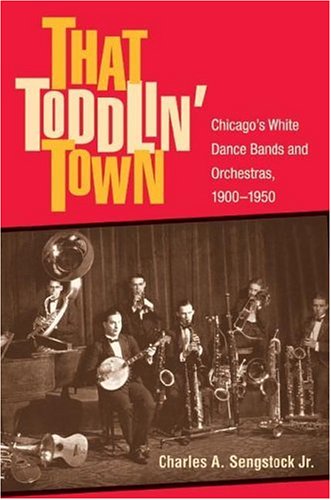
As a centre for jazz and blues, vaudeville, and a budding recording industry, Chicago and its environs probably spawned more nationally recognized dance bands than any other city in the United States in the 1920s and 30s. While ample attention has been paid to their black counterparts, Charles A. Sengstock Jr.'s That Toddlin' Town looks at the history of the white dance bands, theater orchestras, radio studio ensembles and night club bands. Sengstock examines these bands not only in terms of the music they played but also in the context of the venues in which they played and Chicago's volatile economic and social climate. Viewing the bands as an economic system, he analyzes them as businesses with all the usual pressures brought on by ambition, personality clashes, and the overriding need to serve clients. More than a mere popular phenomenon, these dance bands--along with their charismatic leaders, powerful booking agencies, and the Chicago Federation of Musicians--had a major impact on the music industry at large and influence over other entertainment media.


Friday, November 11, 2011

Russo: Street Music; Three Pieces for Blues Band and Orchestra; Gershwin: An American in Paris.: An article from: Sensible Sound

Russo: Street Music; Three Pieces for Blues Band and Orchestra; Gershwin: An American in Paris.: An article from: Sensible Sound Review


This digital document is an article from Sensible Sound, published by Sensible Sound on December 1, 2002. The length of the article is 827 words. The page length shown above is based on a typical 300-word page. The article is delivered in HTML format and is available in your Amazon.com Digital Locker immediately after purchase. You can view it with any web browser.

Citation Details
Title: Russo: Street Music; Three Pieces for Blues Band and Orchestra; Gershwin: An American in Paris.
Publication:Sensible Sound (Magazine/Journal)
Date: December 1, 2002
Publisher: Sensible Sound
Page: 79(1)

Distributed by Thomson Gale


Friday, October 7, 2011

How The Beatles Destroyed Rock 'n' Roll: An Alternative History of American Popular Music

How The Beatles Destroyed Rock 'n' Roll: An Alternative History of American Popular Music Review


Overthrowing the conventional pieties of mainstream jazz and rock history, Elijah Wald traces the evolution of popular music through developing tastes, trends and technologies--including the role of records, radio, jukeboxes and television--to give a fuller, more balanced account of the broad variety of music that captivated listeners over the course of the twentieth century.

Wald revisits original sources--recordings, period articles, memoirs, and interviews--to highlight how music was actually heard and experienced over the years. In a refreshing departure from more typical histories, he focuses on the world of working musicians and ordinary listeners rather than stars and specialists. He looks at the evolution of jazz as dance music, and rock 'n' roll through the eyes of the screaming, twisting teenage girls who made up the bulk of its early audience. Duke Ellington, Benny Goodman, Frank Sinatra, Elvis Presley, Chuck Berry, and the Beatles are all here, but Wald also discusses less familiar names like Paul Whiteman, Guy Lombardo, Mitch Miller, Jo Stafford, Frankie Avalon, and the Shirelles, who in some cases were far more popular than those bright stars we all know today, and who more accurately represent the mainstream of their times.

"Wald's book is suave, soulful, ebullient and will blow out your speakers."
--Tom Waits

"Wald is a meticulous researcher, a graceful writer and a committed contrarian.... An impressive accomplishment."
--Peter Keepnews, New York Times Book Review

"One of those rare books that aims to upend received wisdom and actually succeeds."
--Kirkus Reviews

"It is as an alternative, corrective history of American music that Wald's book is invaluable. It forces us to see that only by studying the good with the bad--and by seeing that the good and bad can't be pulled apart--can we truly grasp the greatness of our cultural legacy."
--Malcolm Jones, Newsweek

"Wald wears his scholarship lightly, but his ideas and insights are substantial.... The attention-grabbing title, for all its counterintuitive appeal, gives scant indication of the book's ambitions and achievements."
--David Suisman, The Sixties


Tuesday, September 27, 2011

Perspectives on American Music since 1950 (Essays in American Music)

Perspectives on American Music since 1950 (Essays in American Music) Review


In fourteen original articles, the contributors to this volume explore the broad range and diversity of post-World War II musical culture. Classical and jazz idioms are covered, as is the broad history of electronic music in the US.


Friday, July 8, 2011

Making Jazz French: Music and Modern Life in Interwar Paris (American Encounters/Global Interactions)

Making Jazz French: Music and Modern Life in Interwar Paris (American Encounters/Global Interactions) Review


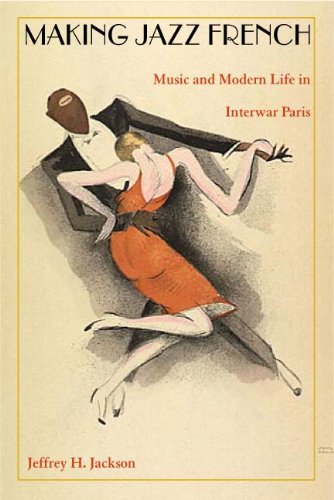
Between the world wars, Paris welcomed not only a number of glamorous American expatriates, including Josephine Baker and F. Scott Fitzgerald, but also a dynamic musical style emerging in the United States: jazz. Roaring through cabarets, music halls, and dance clubs, the upbeat, syncopated rhythms of jazz soon added to the allure of Paris as a center of international nightlife and cutting-edge modern culture. In Making Jazz French, Jeffrey H. Jackson examines not only how and why jazz became so widely performed in Paris during the 1920s and 1930s but also why it was so controversial.

Drawing on memoirs, press accounts, and cultural criticism, Jackson uses the history of jazz in Paris to illuminate the challenges confounding French national identity during the interwar years. As he explains, many French people initially regarded jazz as alien because of its associations with America and Africa. Some reveled in its explosive energy and the exoticism of its racial connotations, while others saw it as a dangerous reversal of France’s most cherished notions of "civilization." At the same time, many French musicians, though not threatened by jazz as a musical style, feared their jobs would vanish with the arrival of American performers. By the 1930s, however, a core group of French fans, critics, and musicians had incorporated jazz into the French entertainment tradition. Today it is an integral part of Parisian musical performance. In showing how jazz became French, Jackson reveals some of the ways a musical form created in the United States became an international phenomenon and acquired new meanings unique to the places where it was heard and performed.