Showing posts with label America. Show all posts

Thursday, February 2, 2012

Gustav Mahler and the New York Philharmonic Orchestra Tour America

Gustav Mahler and the New York Philharmonic Orchestra Tour America Review
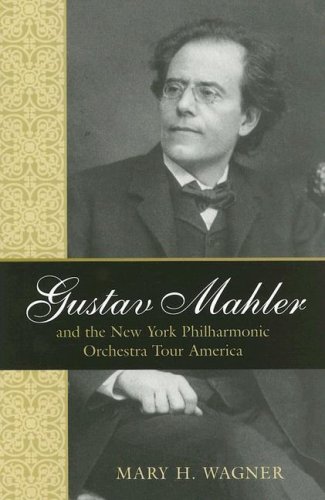


In 1909, when the troubled New York Philharmonic Orchestra needed a leader to rejuvenate and reshape it, composer and conductor Gustav Mahler accepted the challenge. By instituting regular rehearsals, developing a season with forty-six concerts—tripling the previous number, and taking the orchestra on tour, Mahler spent the final two years of his life striving to make the New York Philharmonic the best orchestra in the country, and equal of any in the world. Gustav Mahler and the New York Philharmonic Orchestra Tour America documents Mahler's tours with the orchestra during the 1909 and 1910 seasons, detailing the conditions and preparations for each tour, the outcome of each concert, and the perceptions of audiences beyond New York City. Author Mary H. Wagner amassed data from more than 1,000 articles to present a thorough description of the planning and reception of the Philharmonic on its first tour outside New York. Starting with Mahler's decision to join the Philharmonic, the book describes the ways Mahler designed programs to appeal to American audiences, employing one hundred musicians on the tours and presenting works by Wagner, Strauss, Berlioz, and Bach to audiences, many of whom had never heard them played by a full romantic orchestra. The book also describes the touring conditions throughout America, providing a history of touring and orchestral development at the turn of the twentieth century.


Monday, October 17, 2011

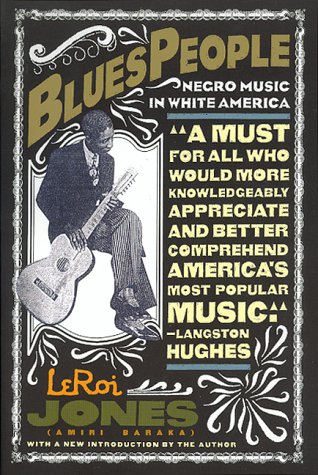
Blues People: Negro Music in White America

Blues People: Negro Music in White America Review


Blues People: Negro Music in White America Feature

  • ISBN13: 9780688184742
  • Condition: New
  • Notes: BRAND NEW FROM PUBLISHER! 100% Satisfaction Guarantee. Tracking provided on most orders. Buy with Confidence! Millions of books sold!
"The path the slave took to 'citizenship' is what I want to look at. And I make my analogy through the slave citizen's music -- through the music that is most closely associated with him: blues and a later, but parallel development, jazz... [If] the Negro represents, or is symbolic of, something in and about the nature of American culture, this certainly should be revealed by his characteristic music."

So says Amiri Baraka in the Introduction to Blues People, his classic work on the place of jazz and blues in American social, musical, economic, and cultural history. From the music of African slaves in the United States through the music scene of the 1960's, Baraka traces the influence of what he calls "negro music" on white America -- not only in the context of music and pop culture but also in terms of the values and perspectives passed on through the music. In tracing the music, he brilliantly illuminates the influence of African Americans on American culture and history.


Thursday, July 7, 2011

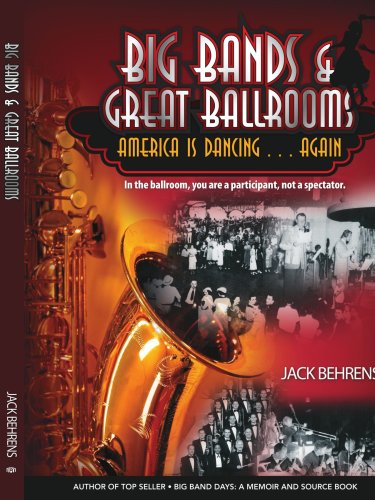
Big Bands and Great Ballrooms: America Is Dancing...Again

Big Bands and Great Ballrooms: America Is Dancing...Again Review


Where did big bands and swing music go? They didn't leave. . . but many Americans actually believe they disappeared along with ballrooms, jukeboxes, bobby sox and zoot suits decades ago. Band leader Brooks Tegler, who has recreated the great music of World War II with his Army Air Corps Review Big Band, offers a good response. "In order for something to come back, it needs to have gone away. Big bands have wrongly been put in that category. They never went away." And that's the essence of the chapters of my book about America's big bands, ballrooms and dancing's past and present. And there's a good look at the future through the eyes of a number of young bandleaders from the east to west coast who carry on in the tradition of Guy Lombardo, Glenn Miller, Harry James, Woody Herman, Duke Ellington and a host of other music legends in their own distinctive way. The struggle to survive in the music business hasn't been without losses and a need for life support. It did when Miller, Benny Goodman, James and Ellington were in their heyday. It's a financially precarious business regardless of your talent. Inevitably, music and dancing evolved and matured. The reasons are numerous and linked to our heritage. But like marching bands on the 4th of July, imagine a country club new year's eve without live dance music and a big band. Think about the many community social events and high school and college proms let alone wedding receptions that still insist on having live bands to play the foxtrots and swing numbers people enjoy. My research shows that while there were approximately 800 big bands on the road during the swing era of the 1940s, today there are nearly 1,300 big bands, according to a Google search and a review of hundreds of territory bands. Consequently, neither the bands nor the music vanished. . . they scattered throughout the American countryside.